Saving enough for a down payment and closing costs can feel like the biggest roadblock…
How Much Down Payment Does a First-Time Home Buyer Need in Massachusetts?
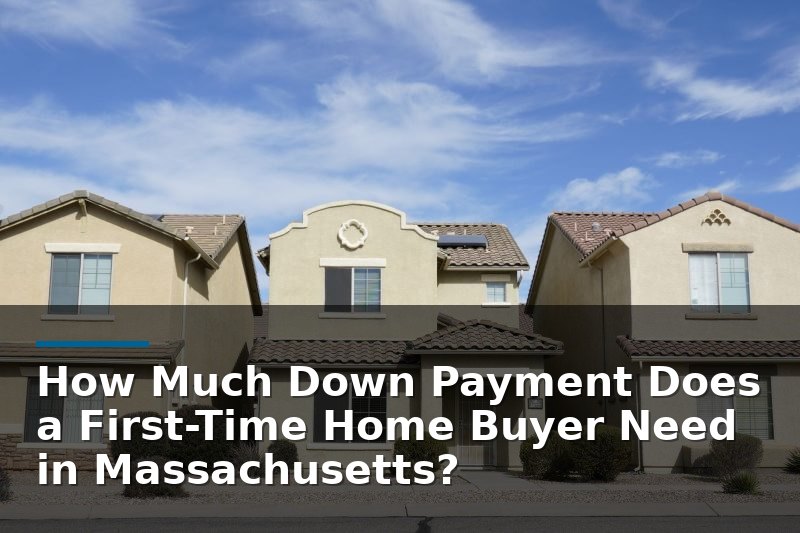
Saving for a home in Massachusetts can feel overwhelming, especially if you think you need a huge down payment before you can start looking.
A first-time home buyer in Massachusetts may need anywhere from 0% down with an eligible VA or USDA loan to 3% down with certain conventional programs or 3.5% down with an FHA loan.
In this guide, I’ll explain the major loan options, what counts as a down payment, and how to estimate the total cash you may need to purchase a home.
Key Takeaways
- Minimum Down Payment: Depending on eligibility and loan type, the minimum may range from 0% to 3.5% of the purchase price.
- Cash Needed: Your down payment is only one part of the money needed for closing, inspections, prepaid expenses, and other costs.
- Assistance: Massachusetts buyers may have access to down payment assistance, but income, property, location, and program requirements apply.
- Best Starting Point: A detailed pre-approval can show which loan programs fit your finances before you make an offer.
I’m Richard M. Bettencourt Jr (NMLS# 7810), President of Veteran Mortgage Brokers, and I help first-time buyers, Veterans, and military service members compare mortgage options throughout Massachusetts and New England.
Quick Answers for Massachusetts First-Time Buyers
- Is a 20% down payment required? No. Many qualified buyers purchase with considerably less than 20% down.
- What is the lowest common conventional down payment? Certain conventional programs permit as little as 3% down for qualified borrowers.
- Does FHA require more money down than conventional financing? The FHA minimum is generally 3.5%, while some conventional programs begin at 3%.
- Can a Veteran purchase with no down payment? An eligible borrower may be able to use VA financing with 0% down, subject to entitlement, property, credit, income, and underwriting requirements.
- Does down payment assistance eliminate every upfront expense? Usually not. Assistance may cover eligible costs, but buyers can still have inspections, deposits, prepaid expenses, or other out-of-pocket items.
How Much Down Payment Do You Need by Loan Type?
GREAT NEWS!!! You may have more options than you thought. The right minimum depends on your eligibility, credit profile, income, property type, available funds, and the loan program being used.
| Loan Type | Common Minimum | Main Consideration |
|---|---|---|
| Conventional | As little as 3% for certain qualified buyers | Mortgage insurance may apply with less than 20% down. |
| FHA | 3.5% | FHA mortgage insurance and property standards apply. |
| VA | 0% for eligible borrowers | Military service, entitlement, occupancy, and VA requirements must be satisfied. |
| USDA | 0% for eligible borrowers and properties | Household income and geographic eligibility limits apply. |
These are program minimums, not automatic approval standards. Individual lenders may apply additional underwriting requirements called overlays. Guidelines also change, so buyers should verify the current rules for their specific scenario.
Conventional Loans With 3% Down
A 3% down conventional loan may be available to qualified first-time buyers purchasing a primary residence. Conventional financing can provide flexibility with property types, mortgage insurance, and long-term planning.
A lower down payment preserves more of your savings, but it also creates a larger loan balance. Private mortgage insurance will commonly be required with less than 20% down. Its cost varies based on credit, down payment, occupancy, loan structure, and other risk factors.
Conventional financing can work well for borrowers with established credit and documentable income. However, the lowest available down payment isn’t automatically the right financial choice. I compare the monthly payment, mortgage insurance, cash reserves, and long-term cost before recommending a direction.
FHA Loans With 3.5% Down
FHA financing generally permits a minimum down payment of 3.5% for borrowers who meet applicable credit and underwriting requirements. FHA guidelines may provide flexibility for buyers whose credit profile does not fit a conventional program as cleanly.
FHA loans include mortgage insurance, and the property must satisfy FHA appraisal standards. Those standards don’t mean the house must be perfect, but health, safety, and structural concerns may need to be addressed before closing.
For a complete program overview, review the FHA home loan requirements. I can then compare the FHA structure against conventional financing using the same purchase price and estimated closing date.
VA Loans With 0% Down
An eligible Veteran, active-duty service member, or qualifying surviving spouse may be able to purchase a primary residence with no required down payment through the VA loan program. Eligibility alone does not determine loan approval. The borrower must still satisfy credit, income, occupancy, residual-income, property, and underwriting requirements.
A VA funding fee may apply unless the borrower qualifies for an exemption. The amount depends on factors such as loan use, down payment, and military category, and it can often be financed into the loan. Current VA rules should always be confirmed during pre-approval.
VA financing can be an excellent planning tool because it may allow an eligible borrower to keep cash available for reserves, moving expenses, or future home maintenance. That doesn’t mean every borrower should automatically put 0% down. I still compare the payment and total loan structure.
USDA Loans With 0% Down
USDA financing may provide 0% down for an eligible property and qualifying household. The property must be located within a USDA-eligible area, and household income limits apply.
Some communities outside the most densely populated parts of Massachusetts may qualify, but eligibility is determined by the program’s current property map and household rules. USDA also has guarantee fees and underwriting requirements that affect the final payment.
Your Down Payment Is Not the Same as Cash to Close
This is where buyers can get surprised. Cash to close includes the down payment plus eligible closing costs and prepaid expenses, minus deposits, credits, and approved assistance.
Your total may include:
- Down payment
- Lender and settlement-related charges
- Attorney and title expenses
- Appraisal and inspection costs
- Prepaid homeowners insurance
- Initial property tax and insurance escrow deposits
- Interest collected for the period between closing and the first payment cycle
- Adjustments for taxes, utilities, or condominium expenses
Your earnest money or purchase deposit is generally credited toward the amount due at closing. Seller credits may also reduce eligible closing costs, subject to the loan program, contract, appraisal, and contribution limits.
Okie Dokie, here’s the big point: a buyer using a low-down-payment loan still needs a complete cash-to-close plan. I don’t want someone focusing only on the down payment and missing the rest of the numbers!
Can Massachusetts Down Payment Assistance Reduce Your Cash Needed?
Down payment assistance may provide a grant, deferred loan, forgivable loan, or repayable second mortgage to help with eligible purchase expenses. The structure matters because assistance is not always free money.
Massachusetts programs may consider:
- Household income
- Purchase price
- Property location and type
- First-time buyer status
- Homebuyer education
- Primary-residence occupancy
- Available personal funds
- Loan program and participating lender requirements
Statewide and local programs can change based on funding availability. Some assistance must be repaid when the home is sold, refinanced, transferred, or no longer occupied as a primary residence. Other programs may forgive assistance over time if all conditions are met.
I review the repayment terms and compare them with standard low down payment purchase options. Assistance can be useful, but its restrictions and long-term cost should be clear before you proceed.
What Counts as a First-Time Home Buyer in Massachusetts?
Many mortgage and assistance programs commonly define a first-time home buyer as someone who has not owned a principal residence during the previous three years. However, definitions and exceptions vary by program.
You could potentially qualify as a first-time buyer even if you owned a home longer ago. Some programs may also include exceptions tied to specific circumstances or designated areas. The program administrator makes that determination, not a general internet definition.
Being a first-time buyer may open access to reduced-down-payment options or assistance, but it does not replace normal underwriting. Income, credit, assets, debts, occupancy, and property eligibility still need to be reviewed.
Should You Put Down More Than the Minimum?
The minimum down payment gets plenty of attention, but the better question is how much fits your complete financial plan.
A larger down payment may:
- Reduce the loan amount and monthly principal and interest payment
- Lower or eliminate certain mortgage insurance costs
- Improve pricing in some scenarios
- Create more equity at closing
A smaller down payment may:
- Preserve emergency savings
- Leave funds available for repairs, furnishings, or moving costs
- Allow a qualified buyer to purchase sooner
- Provide flexibility when competing financial priorities exist
Putting every available dollar into the house can leave a buyer with no cushion after closing. Homes need maintenance, and unexpected expenses happen. I prefer to review both the payment and the buyer’s remaining reserves.
How to Build Your Down Payment Plan
- Review your available funds. Separate the money available for the transaction from the savings you want to keep after closing.
- Document the source of funds. Bank statements, investment statements, gift documentation, or other records may be required.
- Compare loan programs. Review conventional, FHA, VA, USDA, and applicable assistance based on actual eligibility.
- Estimate the complete cash to close. Include the down payment, closing costs, prepaid expenses, deposits, and available credits.
- Plan for the property. Condominium, multifamily, and property-condition requirements can affect program eligibility.
- Complete a detailed pre-approval. Income, credit, assets, and debts should be reviewed before you rely on a purchase budget.
Buyers in Boston, Worcester, the North Shore, and communities throughout Massachusetts can face very different prices, taxes, condominium expenses, and property types. The loan should be matched to the actual property and purchase agreement—not just a generic online calculator.
Ready to Review Your Massachusetts Home-Buying Plan?
You don’t need 20% down to start a serious mortgage conversation!!!! I can help you compare conventional, FHA, VA, and other available mortgage loan options, estimate cash to close, and understand the next steps.
Call, text, or email me to review your scenario and build a pre-approval plan. We’ll look at your down payment, monthly budget, available reserves, and the property type you’re considering. Let’s rock and roll!
Frequently Asked Questions
Can my entire down payment come from a gift?
Some loan programs allow eligible gift funds to cover all or part of the down payment and closing costs. The donor, transfer, documentation, and any required borrower contribution must satisfy the selected program and lender guidelines.
Can I use down payment assistance to buy a condominium?
Possibly, but both the buyer and condominium must meet the applicable program requirements. The condominium project may also require review under the rules for the first mortgage.
Can a first-time buyer purchase a multifamily property with a low down payment?
Certain programs may finance an eligible two- to four-unit property if the buyer occupies one unit as a primary residence. Down payment, reserves, appraisal treatment, and rental-income rules can differ from those for a single-family home.
How long does a Massachusetts mortgage pre-approval take?
Timing varies based on document completeness, credit review, income type, and the complexity of the application. Providing current income, asset, debt, and identification documents promptly can help the review move efficiently.
Can I borrow my down payment with a personal loan?
Borrowed funds are not treated the same way under every mortgage program, and an unsecured personal loan may not be an acceptable down payment source. Any new debt can also affect the debt-to-income calculation, so it should be reviewed before funds are borrowed.
This is educational and not financial advice. Loan programs and guidelines can change. Talk with a licensed mortgage professional about your specific scenario.

About the Author
Richard M. Bettencourt Jr
President at Veteran Mortgage Brokers · NMLS #7810
Rick Bettencourt, “The VA Guy,” is the #1 New England-based VA Mortgage Professional and a Top 200 VA Mortgage Originator nationwide. A nationally recognized VA Home Loan Subject Matter Expert, Rick has appeared on the U.S. Department of Veterans Affairs #TheSitRep podcast. A Past President of NAMB and co-creator of the Certified Veteran Lending Specialist (CVLS), Rick has trained 1,000+ mortgage and real estate professionals and is highly proficient in VA, Conventional, and FHA financing
Specializes in: VA Loans, Conventional, FHA
Licensed in: CT, FL, ME, MA, NH
Related Posts